Chief Technology Officer Career Path: From Developer to Executive sets the stage for this enthralling narrative, offering readers a glimpse into a story that is rich in detail and brimming with originality from the outset.
As we delve into the realm of transitioning from a developer to an executive role, the journey is filled with challenges and opportunities that shape the path to becoming a successful Chief Technology Officer.
Understanding the Role of a Chief Technology Officer
As a Chief Technology Officer (CTO) in a company, one plays a critical role in shaping the technological direction and strategies of the organization. The CTO is responsible for overseeing the development and implementation of technology solutions that align with the company's goals and objectives.
Responsibilities of a Chief Technology Officer
- Leading the technological vision and strategy of the company.
- Managing the IT team and ensuring the successful execution of projects.
- Evaluating new technologies and determining how they can benefit the organization.
- Ensuring the security and integrity of the company's data and systems.
- Collaborating with other executives to align technology with business goals.
Key Skills and Qualifications
- Strong technical background and expertise in IT systems and software development.
- Excellent leadership and communication skills to effectively lead a team and collaborate with other departments.
- Ability to think strategically and innovate, keeping up with the latest technological trends.
- Experience in project management and budgeting to ensure efficient use of resources.
Importance of Strategic Thinking and Leadership
Strategic thinking is crucial for a CTO as they need to anticipate future technology trends and plan how to leverage them for the company's benefit. Leadership skills are essential to inspire and motivate the IT team towards achieving the company's technological goals.
A successful CTO must be able to combine strategic thinking with effective leadership to drive innovation and growth within the organization.
Transitioning from a Developer to a Chief Technology Officer
Transitioning from a developer to a Chief Technology Officer (CTO) is a significant career move that involves a shift in responsibilities and skill sets. Developers who aspire to reach executive roles like CTO must navigate through various challenges and adapt to new job functions.
Typical Career Path
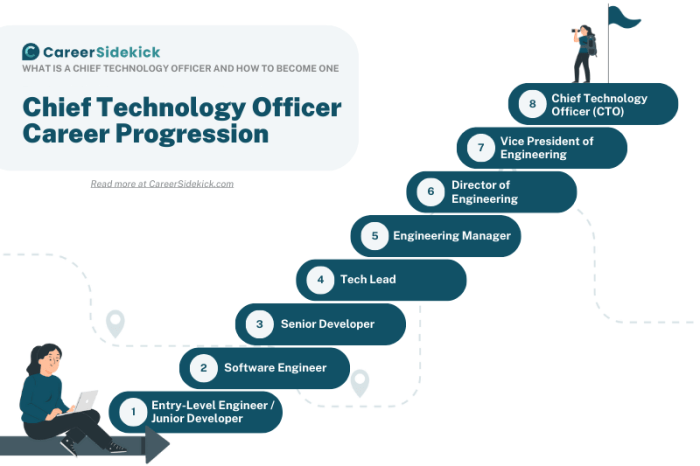
Developers looking to progress into a CTO role often follow a structured career path that involves gaining experience in different technical roles within an organization. This may include roles such as software engineer, technical lead, and architect before eventually stepping into a CTO position.
Differences in Job Functions
- Developers primarily focus on writing code, debugging, and implementing software solutions based on requirements provided. They are more hands-on with the technical aspects of a project.
- CTOs, on the other hand, are responsible for setting the technical vision for the company, making strategic decisions on technology investments, managing technical teams, and ensuring that technology aligns with business goals.
- CTOs also need to have a strong understanding of market trends, emerging technologies, and how they can be leveraged to drive innovation within the organization.
Challenges Faced by Developers Transitioning to CTO
- Developers transitioning to a CTO role may struggle with the shift from a technical focus to a more strategic and leadership-oriented role.
- Adapting to managing teams, dealing with stakeholders, and making high-level decisions can be challenging for developers who are used to working independently on coding tasks.
- Developers turning into CTOs also need to enhance their communication, leadership, and business acumen skills to effectively lead technical teams and align technology with the overall business strategy.
Developing Leadership Skills for a CTO Position
As a developer aiming to transition into a Chief Technology Officer (CTO) role, it is crucial to focus on honing your leadership and management skills
Importance of Communication and Collaboration Skills
Effective communication and collaboration are vital skills for a CTO. As a developer, start by actively participating in team meetings, sharing your ideas, and listening to others' perspectives. Practice clear and concise communication to ensure that your message is understood by all team members.
- Establish open lines of communication within your team to foster a collaborative environment.
- Work on building strong relationships with colleagues and stakeholders to enhance teamwork and productivity.
- Practice active listening to understand different viewpoints and cultivate a culture of respect and inclusivity.
Staying Updated with Industry Trends and Technologies
Continuous learning and staying updated with the latest industry trends and technologies are essential for a CTO. As a developer, take proactive steps to expand your knowledge and expertise in various areas of technology.
- Attend conferences, workshops, and training sessions to stay informed about emerging technologies and best practices in the industry.
- Engage in networking opportunities to connect with industry experts and stay abreast of current trends and innovations.
- Encourage a culture of learning within your team by organizing knowledge-sharing sessions and promoting professional development.
Balancing Technical Expertise and Business Acumen
Chief Technology Officers (CTOs) play a crucial role in balancing their technical knowledge with business acumen to make informed decisions that drive the company's success.
Aligning Technology Initiatives with Business Goals
CTOs are responsible for ensuring that technology initiatives align with the overall business goals of the organization. This involves understanding the strategic direction of the company and leveraging technology to support and enhance these objectives.
- Developing a clear technology roadmap that aligns with the company's long-term vision.
- Collaborating closely with other C-suite executives to ensure that technology investments contribute to the bottom line.
- Identifying opportunities for innovation and digital transformation that can drive business growth.
Examples of Successful CTOs
Several successful CTOs have effectively balanced their technical expertise with strong business acumen, leading their companies to new heights of success.
For example, Megan Smith, former CTO of the United States under the Obama administration, combined her background in technology with a deep understanding of policy and business strategy to drive impactful initiatives.
- Another example is Werner Vogels, CTO of Amazon, who has successfully overseen the technical aspects of the company's rapid expansion while also contributing to its overall business strategy.
- Additionally, Thomas Kurian, CEO of Google Cloud and former President of Product Development at Oracle, has demonstrated a strong ability to align technology solutions with business objectives, driving growth and innovation within the organizations he has led.
Final Summary
In conclusion, the evolution from a developer to a Chief Technology Officer is a transformative journey that demands a blend of technical expertise, leadership skills, and strategic vision. Aspiring CTOs must navigate through the intricacies of the tech realm while keeping a keen eye on the broader organizational goals, ultimately defining their success as leaders in the digital age.
Common Queries
What are the key skills required to become a successful CTO?
Key skills for a successful CTO include strategic thinking, leadership, strong communication, and the ability to align technology initiatives with business goals.
What is the typical career path for a developer to progress into a CTO role?
Developers usually progress to senior developer, tech lead, VP of Engineering, then finally to the role of Chief Technology Officer.
How can a developer aspiring to become a CTO develop strong leadership skills?
Developing strong leadership skills as a developer involves taking on mentorship roles, seeking leadership training, and actively participating in cross-functional projects.